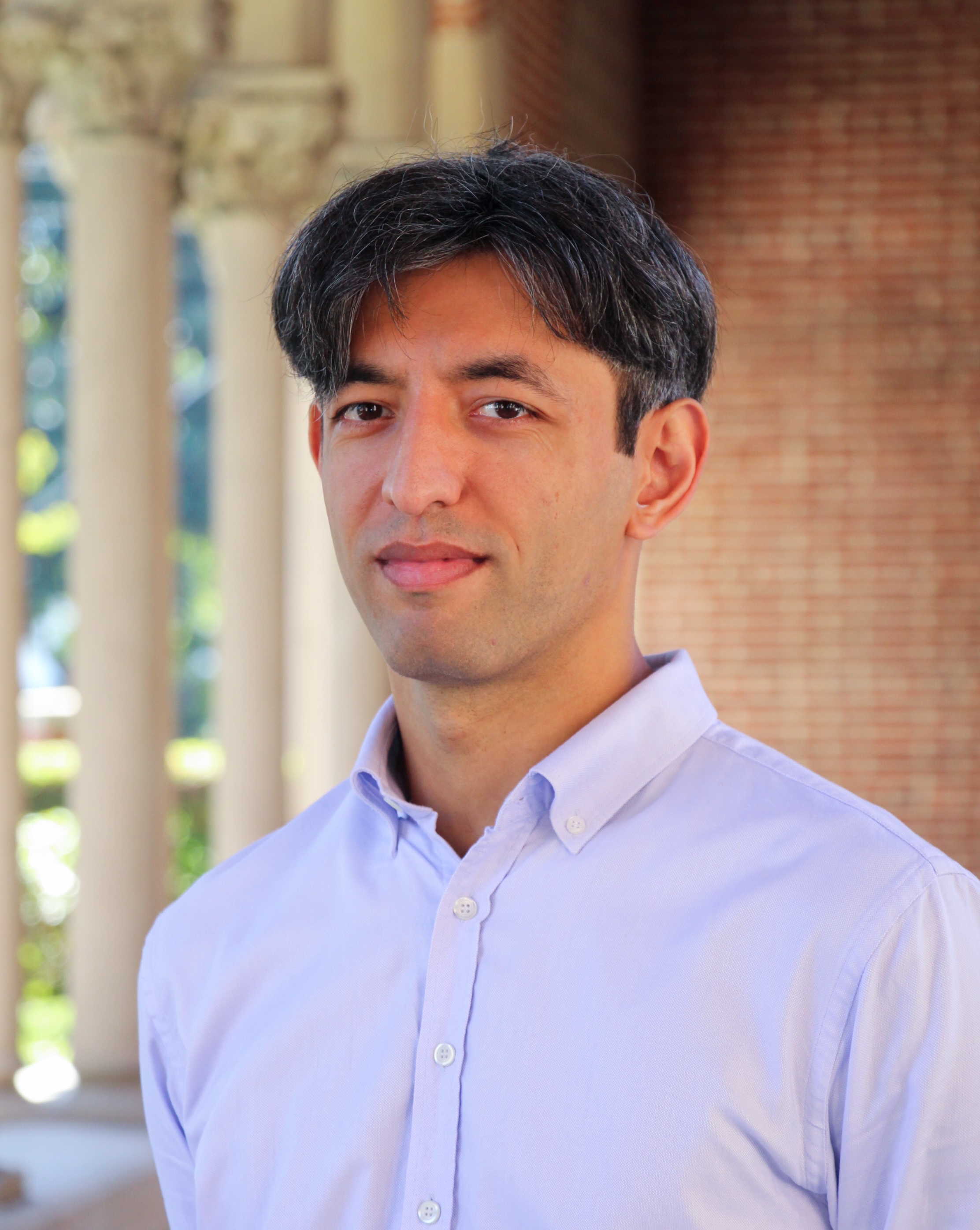
I am a PhD candidate in the Economics department of the University of Southern California.
Research
AI Automation and Labor Market Outcomes
Existing measures of occupational AI exposure ignore worker reallocation, failing to capture true economic impact. In this study, I address this by developing a general equilibrium framework that explicitly models the occupational choice problem for workers. Using administrative German data, I recover the unobserved, heterogeneous comparative advantage vectors that drive these choices. I then simulate a productivity-enhancing AI shock derived from task-level automation scores. The results show that the ability to reallocate determines the distribution of welfare gains: generalists capture the largest relative wage gains by pivoting to high-growth sectors. Conversely, specialists, defined by concentrated comparative advantages, experience significantly smaller gains. This relative penalty affects both low skill workers, whose comparative advantage is confined to manual or service tasks, and high-skill workers who are specialized in certain domains, as the limited transferability of their skills restricts them from accessing the highest returns in the labor market.
Work in Progress
Expertise Acquisition and Excessive Automation
With Serap Inci Ozyer Koca. Draft soon.
We show that automation can be privately excessive: individually profitable adoption can reduce firms’ combined profits when it replaces tasks through which workers acquire expertise. We study two firms that choose whether to adopt automation, with workers acquiring expertise through productive learning or senior mentoring and moving freely between employers. When one firm remains a nonadopter, inexperienced workers can develop expertise through productive work. Universal adoption can increase reliance on mentoring that withdraws experienced workers’ time from production. Under the characterized conditions, universal adoption is a Nash equilibrium despite producing less output than asymmetric adoption. A budget-balanced tax on the adopter, rebated to the nonadopter, supports asymmetric adoption and raises both firms’ profits, aggregate consumption, and entrants’ expected lifetime earnings. These gains can arise even at zero adoption cost.
Teaching
Teaching Assistant at the University of Southern California for
- Intermediate Microeconomics
- Intermediate Macroeconomics